
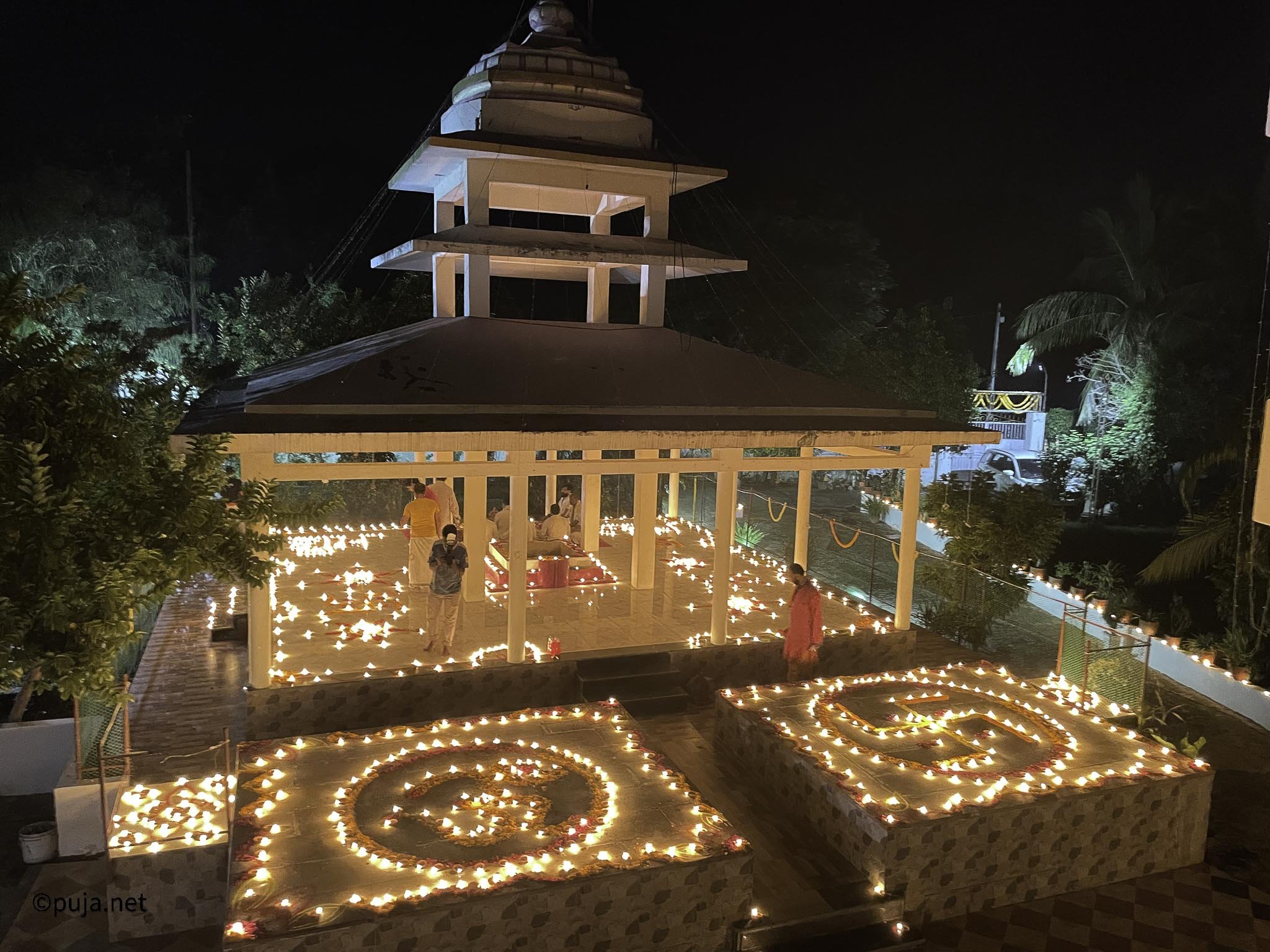
Shivaratri in Varanasi
There is a quiet and much-loved story traditionally told on Mahāśivarātri — the story of a humble hunter whose life was transformed not through ritual knowledge or intention, but through presence, surrender, and grace.
Late one night, a poor hunter found himself lost in a forest, hungry and afraid. To protect himself from wild animals, he climbed into a bilva tree and stayed awake through the darkness, clinging to its branches. Unknown to him, at the base of that very tree stood a Shiva Liṅga. As he fought sleep, the hunter plucked bilva leaves and let them fall below. Drops of water and sweat fell as well. All night long he remained awake, fasting, vigilant — unknowingly performing every essential observance of Mahāśivarātri.
When the hunter later left his body, it is said that the messengers of Yama came to claim him, but were stopped by Shiva’s attendants. Though the man had never set out to worship, his night of fear had become a night of devotion. His wakefulness became vigil. His survival became surrender. Shiva, who responds not to outer form but to inner alignment, granted him liberation.
This is why Mahāśivarātri is so deeply treasured. It reminds us that spiritual grace does not depend on perfection, learning, or even conscious effort. Shiva meets us where we are — especially in moments of vulnerability, stillness, and honest presence. Even a night spent simply staying awake, holding on, and letting go can become sacred.
